Homepage Site Search
Copyrighted Material—All Rights Reserved

Geography Index
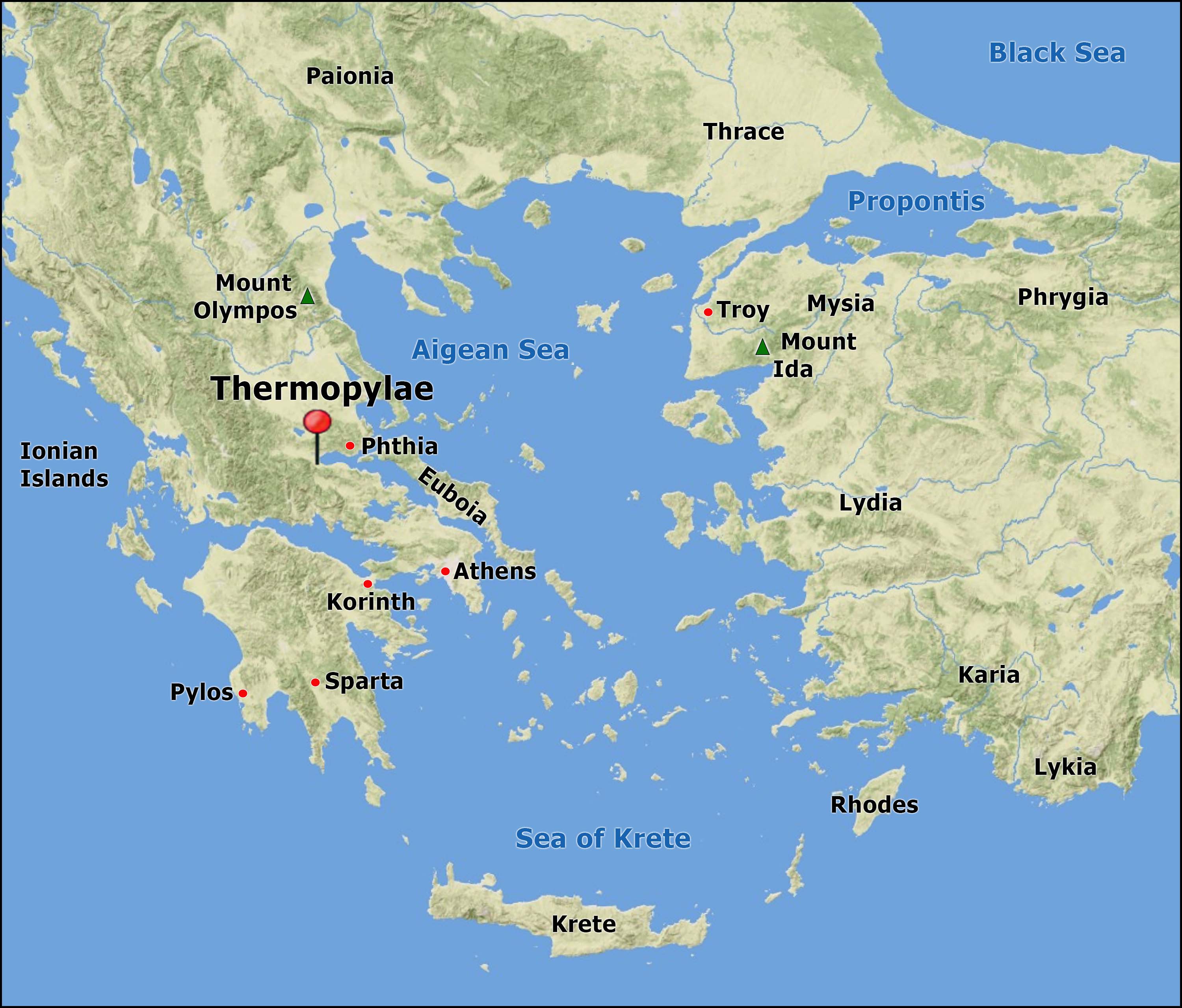
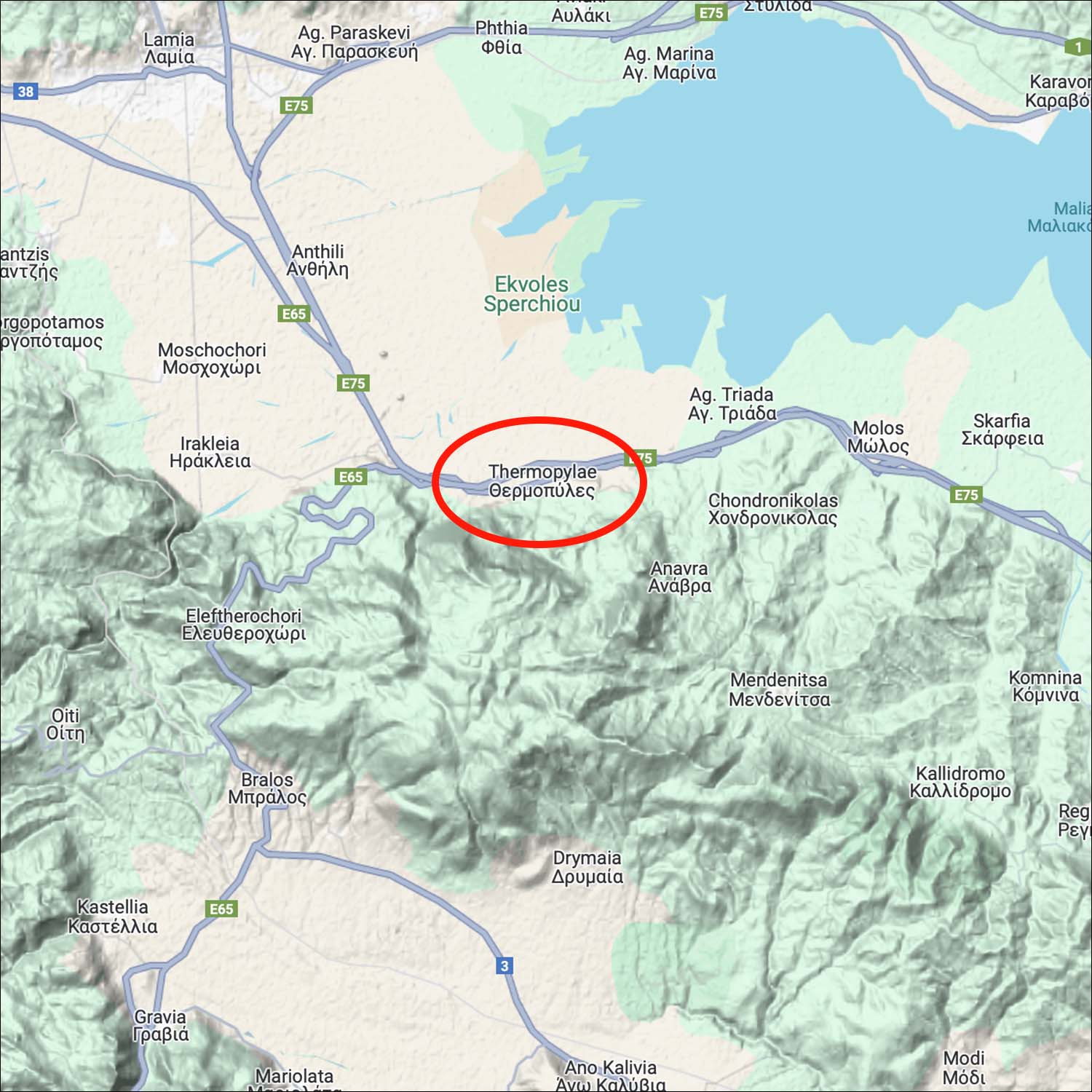
Hot Gates; a narrow coastal pass in central Greece.
Thermopylae is famous for the Battle of Thermopylae in 480 BCE, where the Spartan army stood its ground against the overwhelming might on the invading Persian army.
King Leonidas I of Sparta with 300 Spartans and approximately 7,000 other Greek soldiers blockaded the narrow pass at Thermopylae to impede the Persian army led by King Xerxes I. The goal of the Spartans was to delay the Persian invasion so the other Greek states could muster armies to defend their territories.
The Spartans were doomed from the beginning because of the vast number of Persian troops. The Persians suffered staggering losses as they launched wave after wave of their regular army soldiers against the Spartans. The finest Persian troops, known as the Immortals, were also slaughtered by the Spartans.
A Greek defector named Ephialtes betrayed the Spartans by showing Xerxes a hidden mountain passage that allowed the Persians to circle behind the Spartans and overwhelm them. Realizing his inevitable doom, Leonidas dismissed most of the non-Spartan soldiers and together with some Thespian and Theban allies made a last stand against the Persians. All defenders were killed.
The Persian army and navy thought they were unstoppable but Xerxes underestimated the resolve and cunning of the Greeks. The stunning naval defeat at Salamis and the Persian army's humiliating rout at Plataia (Plataea) forced Xerxes to abandon the invasion and return home in disgrace.
The entire story of the Persian invasion of Greece was documented by Herodotus in his The Histories.
Latitude North, Longitude East
38.7997, 22.5363
| References: Herodotus, The Histories book 7, 175 book 7, 176 book 7, 184 book 7, 186 book 7, 200 book 7, 201 book 7, 205 book 7, 206 book 7. 207 book 7, 213 book 7, 219 book 7, 233 book 7, 234 book 8, 15 book 8, 21 book 8, 24 book 8, 27 book 8, 66 book 8, 71 book 8, 177 book 9, 71 book 9, 78 book 9, 79 |