Homepage Site Search
Copyrighted Material—All Rights Reserved

Geography Index
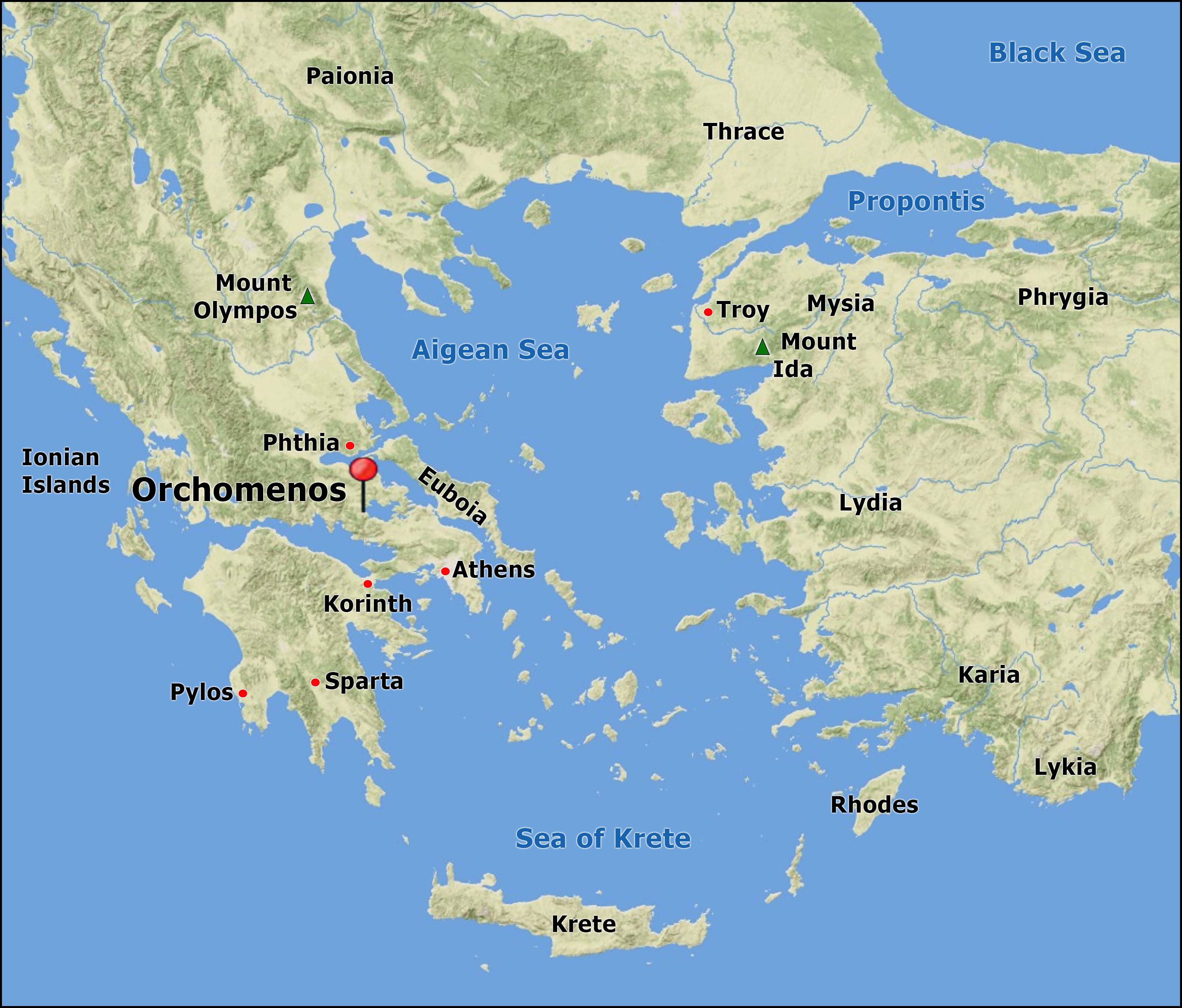
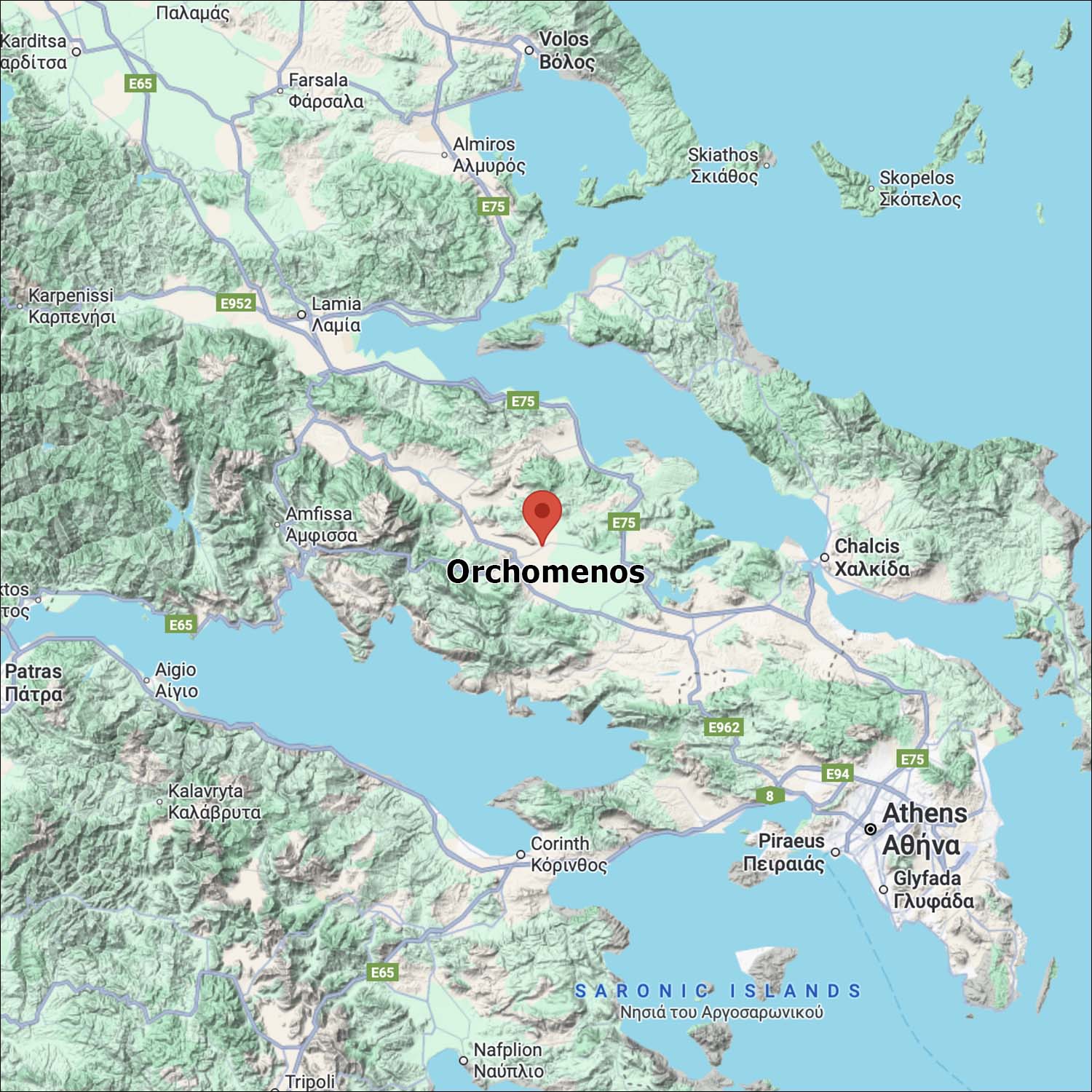
A city in Boiotia (Boeotia).
During the Trojan War, Askalaphos (Ascalaphus) and Ialmenos (Ialmenus) commanded the Achaian (Achaean) soldiers from Aspledon and the Minyan1 city of Orchomenos.
It should be noted that when Homer differentiates between the two cities named Orchomenos, he refers to the Boiotian (Boeotian) Orchomenos as a Minion city whereas the Arkadian (Arcadian) Orchomenos is said to be abounding in flocks.
When the traveler-historian Pausanias (first century CE) visited Orchomenos he noted the distinctive temples of Dionysos (Dionysus) and the Graces but seemed to be awestruck at the size and beauty of the Treasury of King Minyas. Pausanias was told that in accordance with an oracle from Delphi the poet Hesiod2 was buried in the Treasury with Minyas. Orchomenos was being plagued with a pestilence that effected people and animals. The Pythia, priestess of Apollon, said the only way to end the pestilence was to retrieve the bones of Hesiod from Naupaktos (Naupactus) and bring them to Orchomenos. The Pythia said a crow would guide the envoys to Hesiod's bones. As foretold, the bones were found and interred with the bones of King Minyas, thus ending the pestilence.
1. Minyans—named after the first king of Orchomenos, Minyas.
2. Hesiod and Homer lived at approximately the same time (circa 850 BCE). Second only to Homer, Hesiod was the most celebrated poet in Greek history.
Latitude North, Longitude East
38.5235, 22.9890
| References: Homer, Iliad book 2, line 511; book 9, line 381 Pausanias, Description of Greece book 9.38.1–4 Strabo, Geography book 8.3.6 |