Homepage Site Search
Copyrighted Material—All Rights Reserved

Geography Index
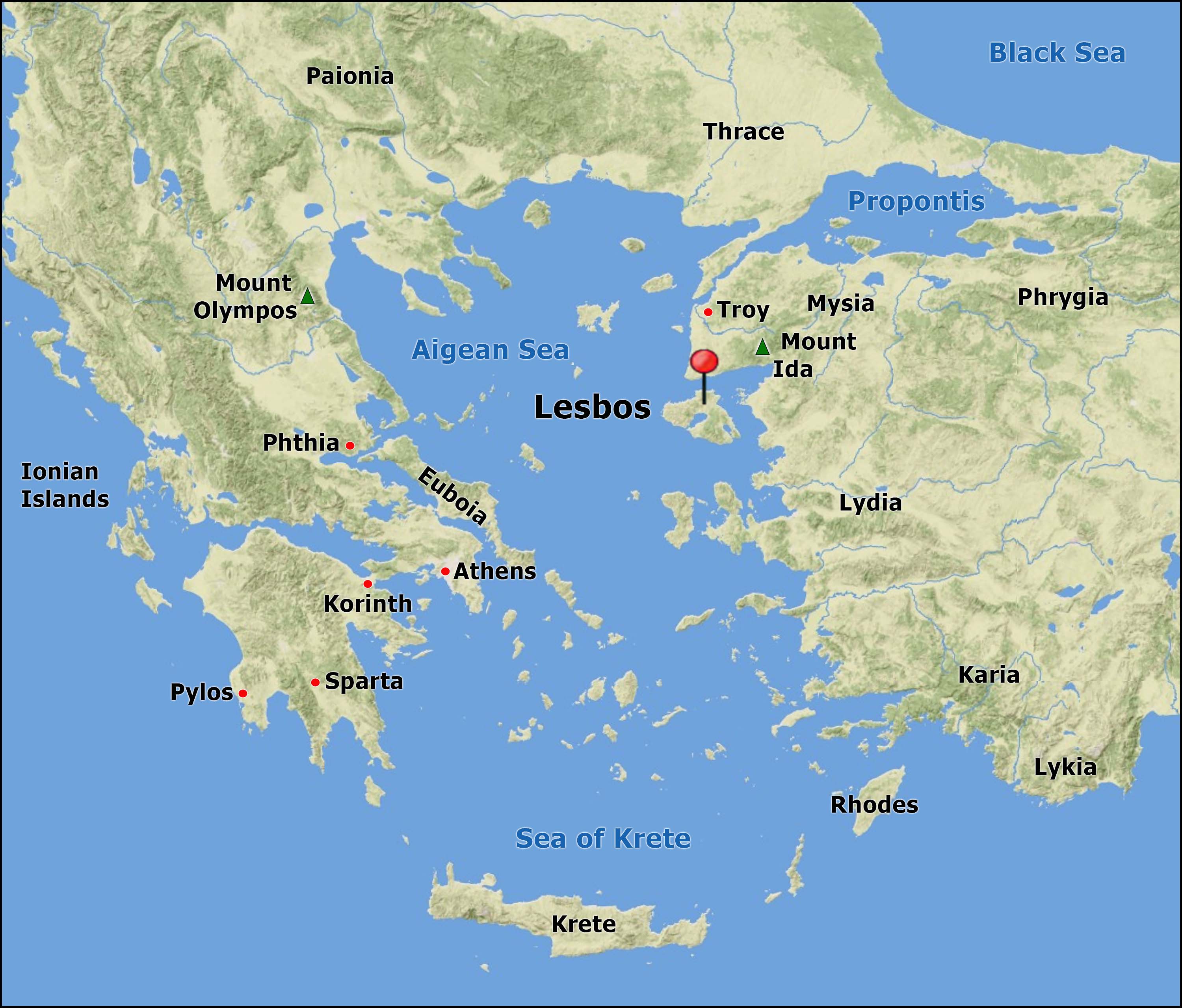
An island in the northeastern Aigean (Aegean) Sea.
Lesbos had once been under Trojan influence, but that changed when the Achaians (Achaeans) arrived. In a conversation with Trojan King Priam, Achilles referred to Lesbos as the realm of Makar (Macar),1 a son of Helios, god of the sun. Achilles abducted a woman named Diomede from Lesbos and took her back to the Achaian encampment at Troy where she was obliged to share his bed.
The uninhabited island was originally called Issa and settled by the Pelasgians who renamed it Pelasgia, after themselves. The devastating flood of Deukalion (Deucalion) took place seven generations later and depopulated the island and most of the inhabited world. After the flood waters receded, a man named Makareus (Macareus) recognized the beauty of the island and settled it with his followers. In obedience to an oracle from Pytho (Delphi), a man named Lesbos came to the island and married Makareus' daughter, Methyma. He became a respected man and in consequence, the island was subsequently called Lesbos.
Makareus was either the son of Helios, god of the sun, or the son of Krinakos (Crinacus), a son of the god Zeus. The name Makareus literally means Blest. Makareus was a magnanimous and effective leader. His influence spread to the neighboring islands of Chios, Kos (Cos), and as far as the island of Rhodes. As a tribute to Makareus' name (Blest), these islands became known as the Islands of the Blest.
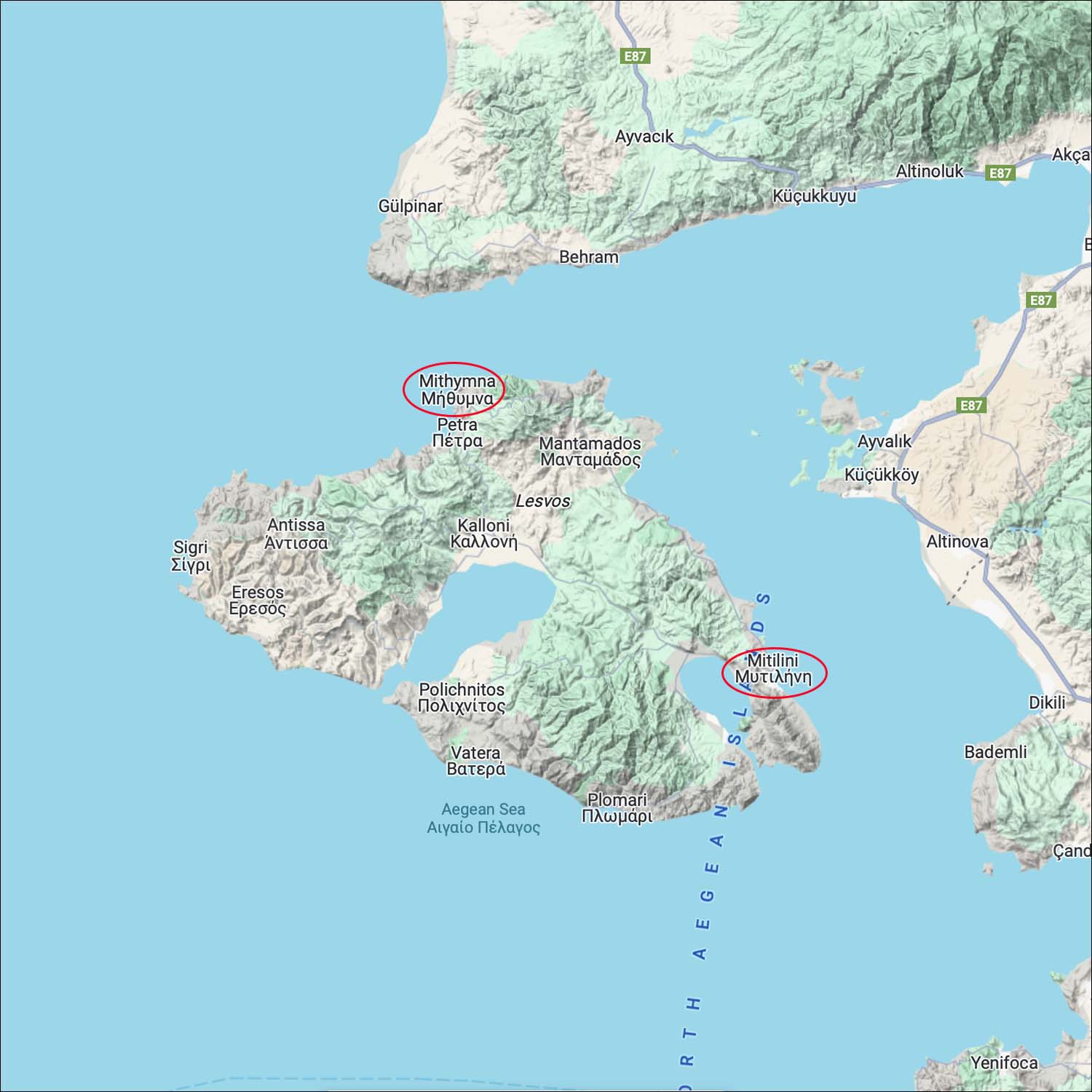
The beneficial and genuine influence of Makareus should not be underestimated. At the time of the Trojan War, which would have been approximately 350 years after Makareus, Lesbos was still known as the realm of Makar, i.e. Makareus. On modern Lesbos, the cities of Mithymna and Mitilini retain their ancient names taken from the daughters of Makareus, Mytilene and Methymna.
1. Makar—the name used by most translations of the Iliad but as Makareus (Macareus) other texts.
2. Pelasgians—a prehistoric race of unknown origins and language who inhabited parts of the Balkan Peninsula and the Aigean Sea.
| References: Homer, Iliad book 9, lines 129, 271, 664; book 24, line 544 Diodorus of Sicily, Library of History book 5.56.2; book 5.57.2; and book 5.81–82 |