Homepage Site Search
Copyrighted Material—All Rights Reserved

Geography Index
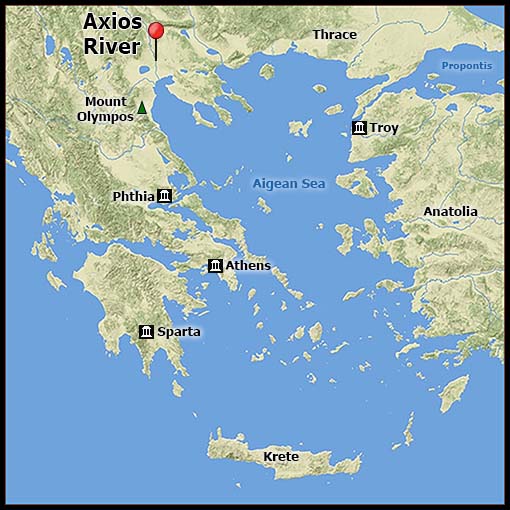
The primary river of Makedonia (Macedonia).
The Axios, the most beautiful river on earth, runs north to south from Paionia (Paeonia) to the Gulf of Thessaloniki.
During the Trojan War, Pyraichmes (Pyraechmes) commanded an undisclosed number of Paionian bowmen as Trojan allies from Amydon and the banks of the Axios River.
In a pitched fight against a contingent of Paionans, Achilles came face to face with Asteropaios (Asteropaeus), the son of Pelegon and grandson of the river-god Axios. Asteropaios boasted his linage but Achilles replied that no man descended from a river could defeat a descendant of the god Zeus, which Achilles believed himself to be. Achilles killed Asteropaios and unceremoniously tossed his body in the nearby Xanthos (Xanthus) River.
Translators of the Iliad universally laud the purity and beauty of the Axios. There is however a question as to exactly what Homer was saying about the Axios. The geographer Strabo (early first century CE) saw the Axios and said it was muddy and full of silt. He wondered why Homer, who was so meticulous about his geographical observations, could describe the Axios as beautiful. Strabo concluded that the word αία had been transcribed incorrectly. Normally, αία means earth but capitalized as Αία, it would be the name of a spring that feeds the Axios, a stream that is noted for its pure waters. If that's true, the reference to the "lovely waters" was praise for the spring of Aia and not the Axios.
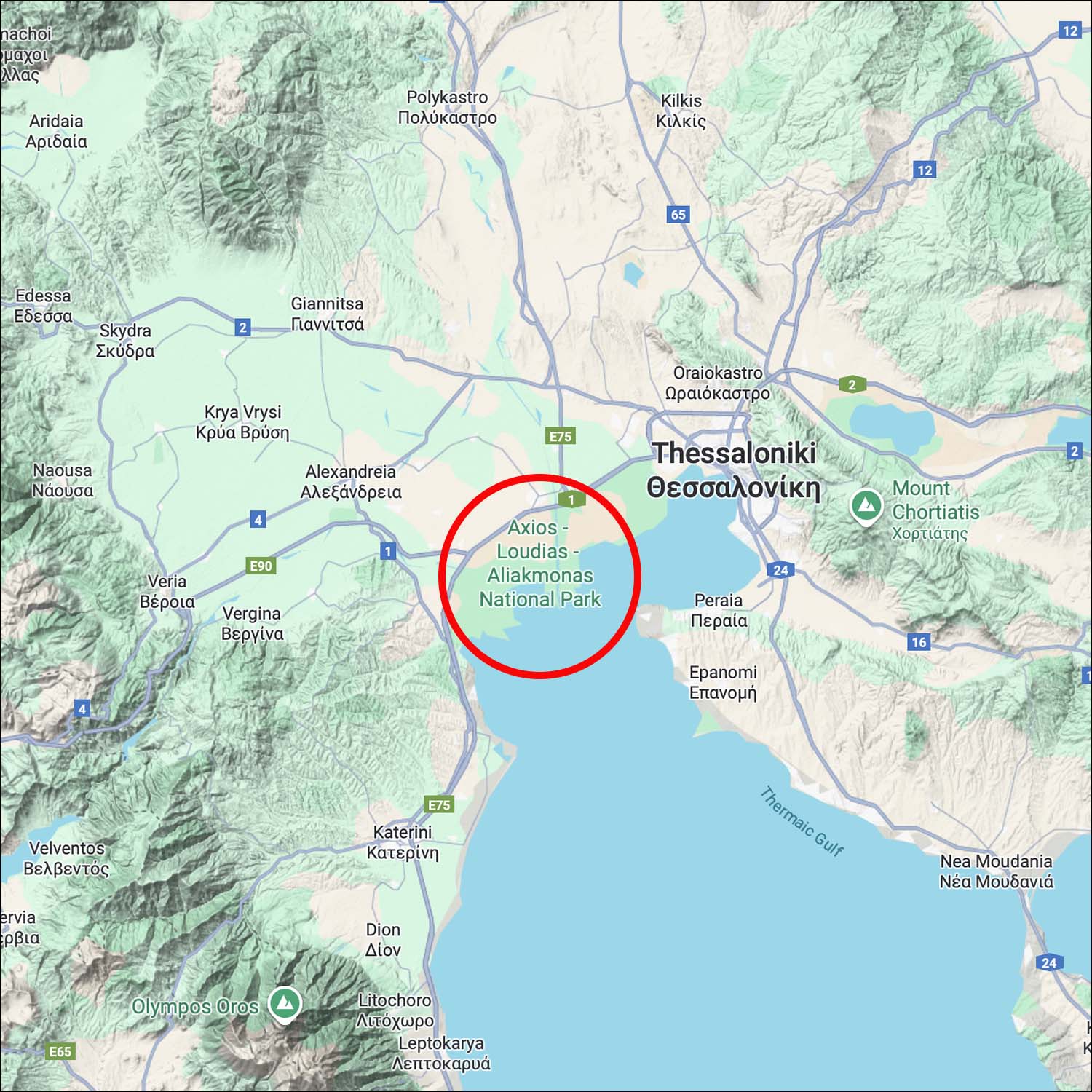
Outlet to sea:
Latitude North, Longitude East
40.5092, 22.7180
| References: Homer, Iliad book 2, lines 849, 850; book 16, line 288 Strabo, Geography book 7.22 |